
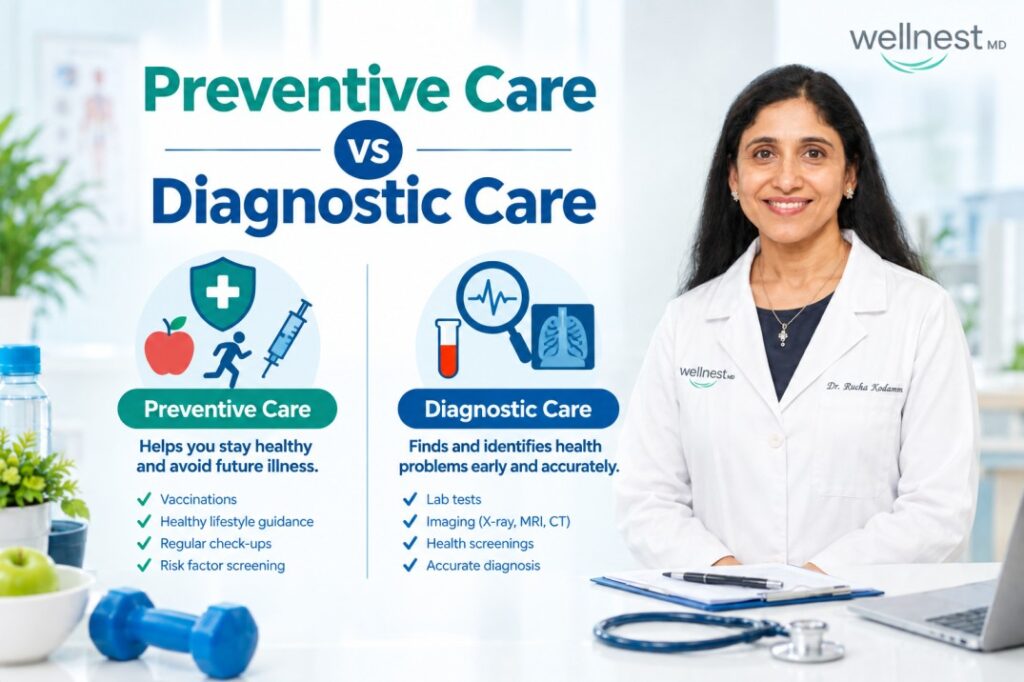
Preventive and Diagnostic Care Serve Different Purposes
Preventive care and diagnostic care are both important parts of healthcare, but they are used for different reasons.
Preventive care focuses on maintaining health and identifying potential problems before symptoms develop. Diagnostic care is used when a symptom, abnormal finding, or health concern needs to be evaluated further.
At Wellnest MD in Sandy Springs, GA, understanding this difference can help you know when routine preventive care is appropriate and when a specific health concern requires further evaluation.
What Is Preventive Care?
Preventive care is healthcare provided to help maintain your health and identify potential risks early, often before you notice symptoms.
Depending on your age, health history, and individual risk factors, preventive care may include:
- Routine wellness visits
- Blood pressure monitoring
- Cholesterol screening
- Recommended vaccinations
- Age- and risk-appropriate health screenings
- Lifestyle and health-risk assessments
- Monitoring of existing risk factors
The specific preventive services you need can change throughout your life.
What Is Diagnostic Care?
Diagnostic care is used when there is a specific symptom, abnormal test result, or medical concern that needs further evaluation.
For example, if you have persistent fatigue, unexplained weight changes, chest discomfort, or repeatedly elevated blood pressure, your provider may recommend additional evaluation to determine what is causing the concern.

Diagnostic care may involve:
- Reviewing symptoms and medical history
- Physical examination
- Laboratory testing
- Imaging or other diagnostic testing when appropriate
- Additional evaluation or referral to a specialist
The goal is to understand the cause of a health concern and determine the appropriate next step.
Preventive vs. Diagnostic Care: A Simple Comparison
|
Preventive Care |
Diagnostic Care |
| Focuses on maintaining health | Focuses on evaluating a specific concern |
| Often occurs before symptoms appear | Usually begins after a symptom or abnormal finding |
| Helps identify risks early | Helps determine the cause of a problem |
| Includes routine screenings and vaccinations | May involve targeted tests or examinations |
| Supports long-term health monitoring | Guides evaluation and treatment of a concern |
Both types of care can be important, and one does not replace the other.
When Do You Need Preventive Care?
Preventive care is appropriate even when you feel healthy.
Regular preventive visits can help your provider:
- Review your overall health
- Monitor important health measurements
- Identify cardiovascular and metabolic risk factors
- Keep recommended screenings and vaccinations up to date
- Discuss lifestyle factors that may affect your health
Preventive care is particularly valuable because some health conditions can develop without noticeable symptoms.
When Is Diagnostic Care Appropriate?
Diagnostic evaluation may be needed when you develop a new or persistent concern.
Examples include:
- Ongoing or unexplained fatigue
- Persistent pain
- Changes in weight without an obvious cause
- Repeatedly abnormal blood pressure readings
- Changes in laboratory results
- New or worsening symptoms
Your provider can determine whether further testing or evaluation is appropriate based on your individual situation.
How Wellnest MD Approaches Your Care
At Wellnest MD in Sandy Springs, GA, preventive and diagnostic care can work together as part of ongoing primary care.
Your provider can review your health history, current concerns, risk factors, and relevant health information to determine what type of evaluation or monitoring is appropriate.
This helps ensure that care is based on your individual health needs rather than a one-size-fits-all approach.
Don’t Wait for Symptoms to Start Caring for Your Health
Preventive care is not only for when something feels wrong. Regular healthcare visits can help identify potential risks before they become more significant concerns.
At Wellnest MD in Sandy Springs, GA, personalized primary care helps you stay informed about your health and address concerns when they arise.
Schedule Your Primary Care Consultation Today